DIY Death Care: Home Funerals
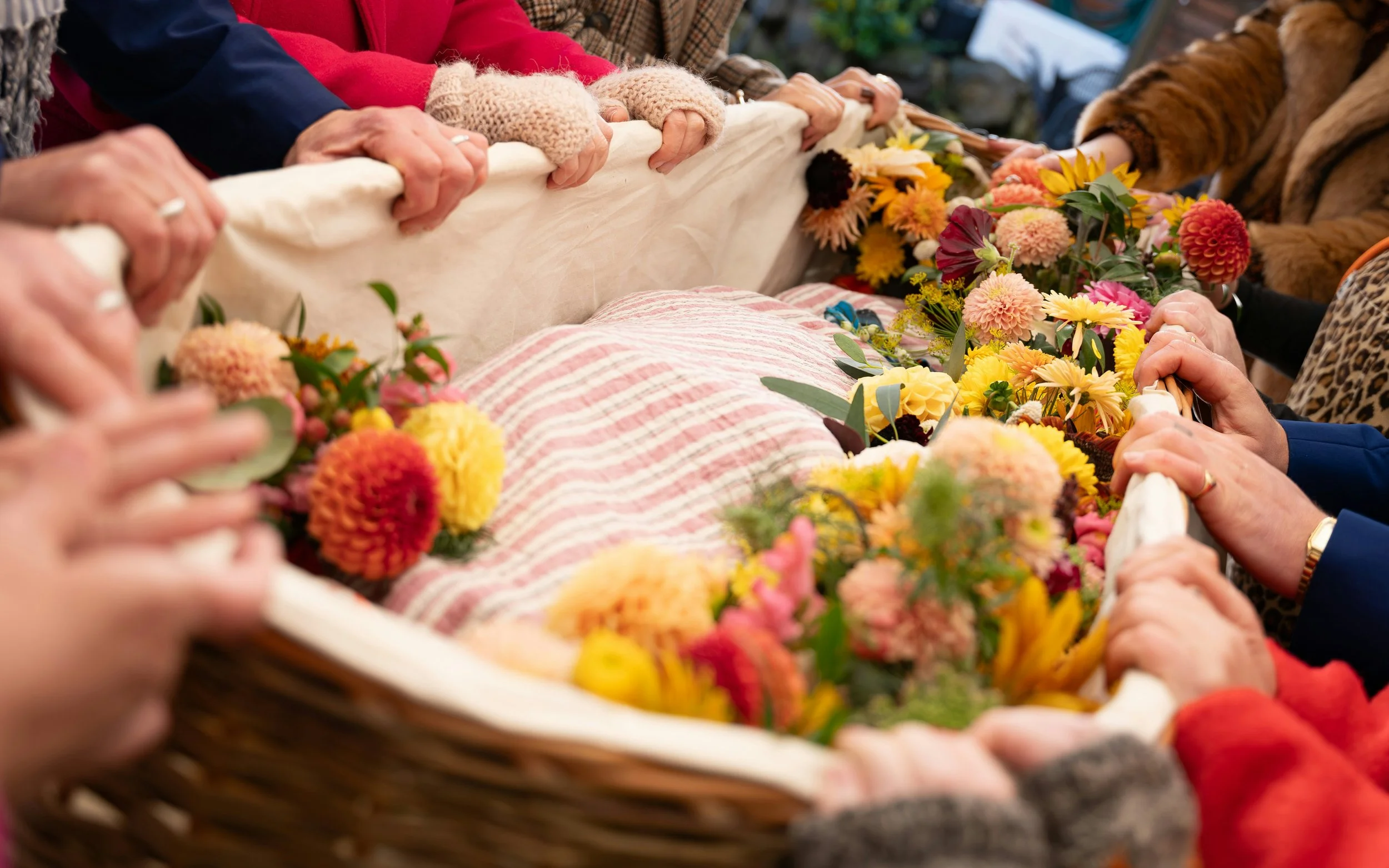
Home funeral and green burial depiction. Image courtesy of Dead Good Legacies.
Where are all my DIY people at?
I’ve mostly been a “do it yourself” kind of person. I think I inherited it from my parents. From growing up watching shows like This Old House and Room by Room, to being homeschooled/unschooled and essentially being in charge of figuring out how I learned best, I’ve always enjoyed the challenge of understanding how things work and then figuring out how to do them myself.
So when death work entered the picture as something I’ve become deeply passionate about, it wasn’t surprising that I went down rabbit holes learning about the history of how humans have cared for their dead loved ones throughout time and across cultures.
One thing I’ve become particularly drawn to in recent years is the home funeral.
There was an immediate gravitation to this concept when I first started learning more about them. They just made sense to me.
For much of Western history, caring for our dead was something that happened at home. During the Victorian era, the parlor was often the center of the home funeral. Families would bring their deceased loved ones into the parlor, where they could be visited, mourned, and honored by family and community.
As the profession of the funeral director became more established in the late 19th and early 20th centuries, funeral homes and funeral parlors began to take cues from the home. They were designed to provide a familiar, home-like environment, but with professionals taking on much of the work of caring for the dead.
Fast forward nearly a century, and most of us have had very little opportunity to be around death, let alone be part of the after-death care of our loved ones' bodies.
I want to be clear: I have enormous respect for the work funeral directors do for their communities. They provide an important service, and there are many situations where professional care is exactly what a family needs. But I also want more people to know that, in many circumstances, families have the legal ability to participate in the care of their loved one after death.
That doesn’t mean home funerals are right for everyone, and they aren’t appropriate in every situation. But for many families who have experienced some degree of family-led after-death care, it becomes a profound and deeply meaningful part of their experience of death and grief.
There is something so touching about the home funeral stories I’ve encountered. Families and friends come together to surround their loved one with care and attention. They wash and dress the body. They spend time sitting with them. They make the space beautiful. They tend to the small details that feel meaningful and personal. And in doing so, they are not only caring for the person who died, they are also caring for themselves and tending to their early stages of grief in a very physically embodied way.
I’ve heard people describe, again and again, how strange it can feel when a loved one dies and their body is collected almost immediately. Logically, we may understand that the person is gone. But emotionally and physically, there can be a disconnect between knowing someone has died and actually experiencing that new reality. There can be something about that very brief process of spending time with your dead that feels unfinished.
Family-led after-death care can offer a different experience. It can ground us in the present moment and allow the care we provided our loved one at the end of their life to naturally flow into the care we provide after death. It gives our bodies and minds a little more time to catch up to this new reality that someone we love is no longer residing in their body.
For me, this is a big part of why I care so much about making sure people in our communities know that this is an option. We all deserve to know what choices we have, what’s on the menu for end of life options.
So, on November 17th, I’ll be hosting a workshop on home funerals where we’ll walk through the basics of what a home funeral is, the history behind this practice, legal considerations, and what the actual physical care of a person after death can look like.
I’m excited to bring this knowledge into our community, knowledge that can sometimes feel like it has been forgotten, but that a growing number of us are trying to relearn.
Not everything needs to be left up to the professionals; sometimes we can (re)learn how to do it ourselves. And I believe we all deserve the opportunity to know how.
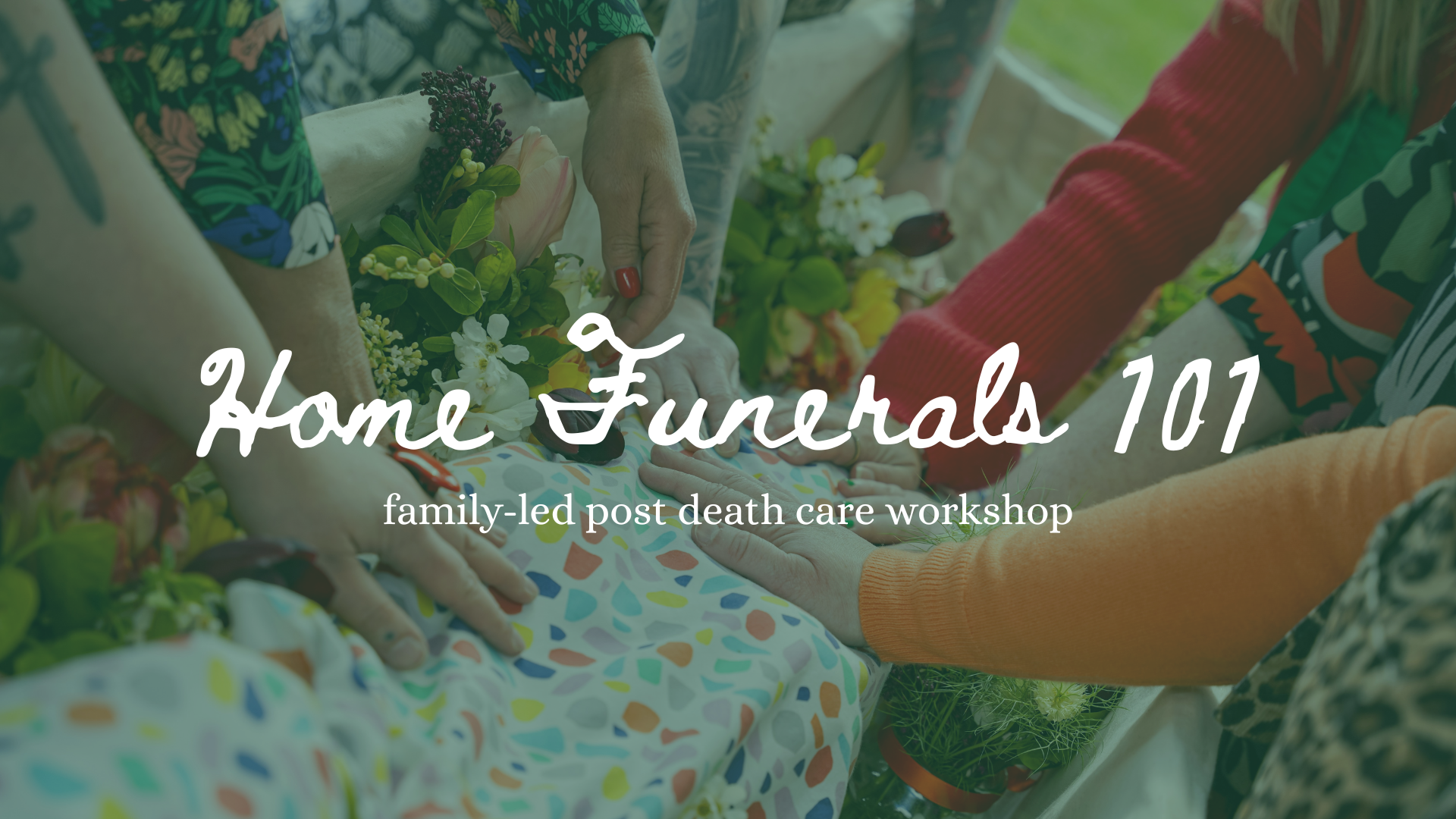
Home Funerals 101 Workshop
November 17th 6:00 - 8:00 PM
at Arbor Street Collective
All curious souls are welcome to join my upcoming workshop and learn about family-led death care!
Home Funeral Stories
I love the A Path Home Podcast! Sara Crews, the founder of Heart Land Paraire Cemetery in central Kansas, is the show host. It’s always wonderful to hear her and the podcast’s guest share bits about their stories in this sacred work.
From the Podcast
“What is a home funeral? How can I have a green burial? Do I have to hire a Funeral Director? On this podcast we'll be focusing on reclaiming our innate right to care for our own loved ones at death in natural, and often, environmentally friendly ways. We'll demystify the tasks related to after death care through hearing stories from people who have ventured into culturally unfamiliar territory and cared for their own deceased loved ones at home, chose a natural burial or both.
Hearing what's possible and how lives have been transformed by engaging in this final act of love is one path towards changing our culture and our relationship to death. A Path Home is a production of the National Home Funeral Alliance.”
Risa Morimoto shares some footage from her mother’s home funeral. It’s full of personal touches, so many flowers, notes, candles, and many loved ones sending her mother off.
She writes this about the video:
“Death and dying is a scary concept for so many people. And to be honest, it's hard to watch someone you love deeply transition to die and go to the afterlife. But it is also a privilege. My mother was 84 years old when she passed, having struggled for the last 19 years suffering a massive stroke, Parkinsons and cancer.
This video is deeply personal as I documented my mother's final stages of llfe and the home funeral that we arranged. It took me a couple of months to even revisit the footage. It was therapeutic to edit this video despite it being extremely emotional as well. But my hope is that others will find comfort in the dying process and end of life. It is natural and will happen to all of us. We had numerous conversations with my mom about her impending death and her biggest wish was to die at home. There were times her health was so weak that we weren't sure if we were going to be able to fulfill her wish but in the end, we were able to which gave us all great satisfaction. But we knew this because we had the conversation.